Pages

Tuesday, 26 December 2017

SLJ - Week 2 day 2 - (Bonus activity)


Bonus Activity: Crossing the Tasman
In 1928, a crew of four men flew, for the first time, across the Tasman
from Australia to New Zealand. One of the men on board the
Southern Cross airplane was a New Zealander named T.H. McWilliams.
His job was to operate the radio in the airplane. Unfortunately, the radio
stopped working shortly after take-off and the rain and ice were so heavy
that the pilot, Kingsford Smith, couldn’t see out of his front windscreen.
Yikes! Fortunately, the plane made it all the way across the Tasman
landing in Christchurch after a 14 hour trip.

Imagine that you were a member of the flight crew. Write a poem that
describes how you would have felt when you landed safely in Christchurch
after such a long trip. Remember, there are lots of different types of poems,
and they don’t all have to rhyme. You can read more about different types
of poems by clicking here.

14 hours felt like 5 days
It was scary because we couldn’t see the way
It was raining like a hurricane
Hitting hard on our plane
We were hoping it would not last
Until hearing a big blast
We arrived at christchurch then rest for a while
Until having the biggest smile


This is a rhyming poem

BONUS POINTS: 10

SLJ - Week 2 day 2 - (Activity 1 to 2)

Day 2: The Roaring 20’s (The 1920s)


Activity 1: Popular Culture – The Silent Movie
The 1920s saw a massive surge in the number of people going to
the movies. Huge new cinemas were built in both Auckland (The Civic Theatre)
and Dunedin (Empire De Luxe).  The most popular type of movies
showing at local NZ cinemas were ‘silent’ films. Gold Rush is an example
of an iconic silent film. It features a famous actor named Charlie Chaplin.

Watch the trailer for Gold Rush. On your blog, tell us what you think
the movie is about. There are no words spoken movie so you will
need to pay careful attention to what the actors are doing! Do you
think you would enjoy watching a silent film? Why/Why not?

For me I would not enjoy watching a silent film just because I won't
understand that much. It is just because I cannot hear anything which
make me sleep and I don't understand what the whole thing is about.
I understood what this silent movie was about but I think that's all.


Activity 2: Art Deco

In the 1920s a new artistic movement emerged in New Zealand
(and around the world). It was called ‘Art Deco.’ The picture to
the right is a classic example of an ‘Art Deco’ piece. Take a close
look at the painting. Do you like it?

On your blog, give the painting a rating out of 5 stars (1 star = terrible painting,
2 stars = pretty bad painting, 3 stars = okay painting, 4 stars = good painting
and 5 stars = amazing painting). After you’ve rated the painting out of 5,
tell us why you gave it that rating.

Right: Self Portrait By Tamara de Lempicka

For me it’s a obvious 5 star (Amazing painting)  painting because the texture
makes it stand out really good. As you look at the picture you will
already know what it is. It is a lady driving a car (Which you already know). But
this is a big 5 star.


Monday, 25 December 2017

SLJ - Week 2 day 1 - (Bonus Activity)


Bonus Activity: In Flanders Fields


As the new century dawned, New Zealanders settled into a period
of relative calm. The calm lasted for about 15 years but came to a
sudden end in 1914 when World War I erupted in Europe. The war
lasted for almost five years and claimed the lives of 18,000 New Zealanders.


It also claimed the lives of thousands of men and women from countries
around the world. Every year, we remember these brave men and women
on ANZAC Day (25 April). Many people go to a special Anzac Day
ceremony where they read a special poem that was written for the fallen
soldiers. The poem is called ‘In Flanders Fields’ by John McCrae.


Read the poem. On your blog, tell us what you think of the poem. Do
#you like it? How does it make you feel?


It makes me feel very lucky to live in a beautiful, safe country like New
Zealand. It also makes me feel sad for those who died in the war and
for their families. I think that we are very lucky that they went to war
and fought for our freedom. What do you think?

That poem made me think over and over again what army men did for
us. I’d imagine what it will be like if they didn’t go to fight for our freedom.
But what they did for us was insane. They fought for our freedom and died.
I also feel sad for them and for all their family members. I am so glad to be
living in a safe environment in New Zealand.


BONUS POINTS: 10

SML - Week 2 day 1 - (Activity 1 to 2)


Day 1: The Early Years (Late 1800s – 1919)


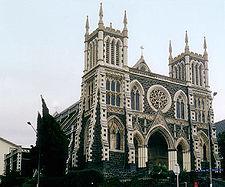
Activity 1: St Joseph’s Cathedral
At the turn of the century, there was a great deal of construction
happening in New Zealand. Many of the new British settlers wanted
to build homes and community meeting places, such as churches. One
of the largest buildings to be constructed during this period was

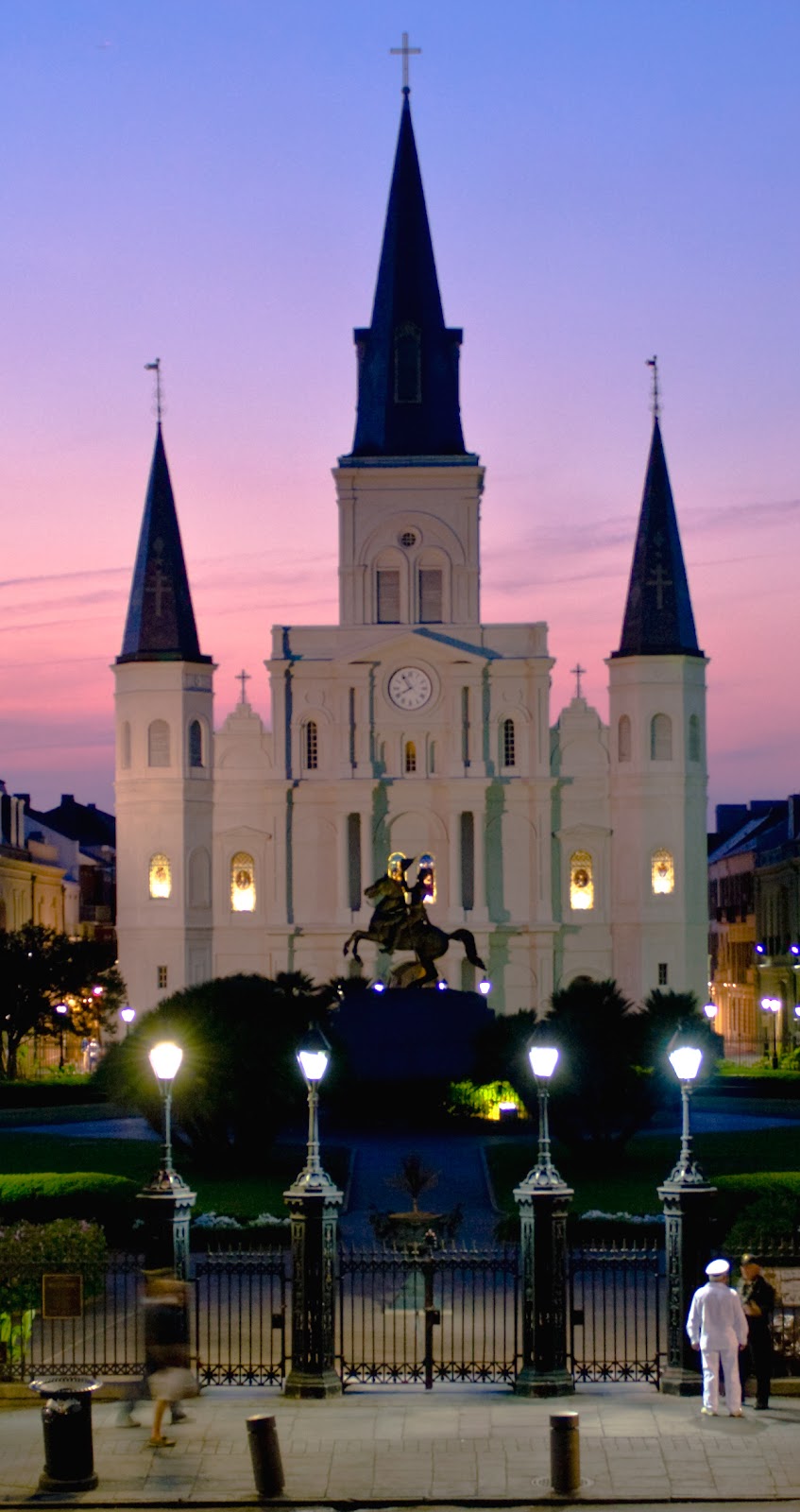
Use your search engine to find a picture of another famous
cathedral. Post a picture of the cathedral on your blog.
Underneath the picture tell us: the name of the cathedral,
where the cathedral is located, when it was built, and how long it took to build.


St. Louis Cathedral

This is St. Louis Cathedral. It is located at united state
which was built in 1727. It is known to be the oldest
in united state. It is unknown for how long did it take to build.


Activity 2: The Right to Vote

At the turn of the century, New Zealand elected its first ever
government. Richard John Seddon served as the leader of the Liberal
Party from 1893-1906. Prior to 1893, only men were legally allowed to
vote. This all changed in the late 1800s when a woman named
Kate Sheppard lead a suffragist movement in New Zealand
calling for a change in law. Her hard work finally paid off when the
Electoral Act was passed into law on 19 September 1893, giving women
the right to vote. New Zealand was the first country to give all women the
right to vote. There were still countries in the world (e.g. Saudi Arabia)
who, until recently, did not allow women to vote.

On your blog tell us what you think about the fact that women were
not allowed to vote in Saudi Arabia until 2015. Is it fair? Why or why not?

To me it im not sure. But my thought is that it is not fair for the womens
not allowed to vote. All there votes relies on men. They should have
the same chance as us men. So for me it is not fair. But it’s all right
now since they can vote.


Friday, 22 December 2017

SML Week 1 Day 5

Bonus Activity: #EarnTheFern

After the Treaty of Waitangi was signed, New Zealand became a
British colony. Many other countries in the world are also British
colonies including Canada, South Africa, Australia, India and Malaysia.
As a group they were, and still are, called the ‘Commonwealth’ countries.
Years ago, a man named Melville Marks Robertson was asked to organize
a sporting competition for people living in the Commonwealth countries.
It is called the Commonwealth Games. The first ever event took place in
Hamilton, Canada in 1930.

Athletes from New Zealand have competed in the Commonwealth
Games for years. In the most recent Commonwealth Games event in
Glasgow, Scotland New Zealand athletes won a total of 45 medals.
The next Commonwealth Games will be held in 2018 in the
Gold Coast, Australia. Hundreds of athletes are competing for the chance to
represent NZ at the games (to 'Earn the Fern').

One of New Zealand’s gold-medal-winning Commonwealth athletes
was a man named Bill Kini. Bill won a gold medal at the 1966
Commonwealth Games for being the best heavyweight boxer. He
was a man of many talents! He played rugby in Ōtāhuhu in the 1960s and later
moved to Whangarei.

Imagine that you could interview Bill. What would you ask him about
his time at the 1966 Commonwealth Games. What would you want to know?
I’d like to know how he had time to train for two sports at once.

4 question I would ask Bill Kini:

  1. How does it feel being the best heavyweight boxer?
  2. Did rugby help you in your boxing currier?
  3. Which sport would you rather recommend?
  4. Are you proud to be representing New Zealand?

BONUS POINTS: 8

SLJ Week 1 day 5


Activity 2: The Treaty of Waitangi

On 6 February 1840, a very special document was signed by the Māori chiefs and the
British settlers in New Zealand. It was called the Treaty of Waitangi (Te Tiriti o Waitangi)
and it outlined how the two groups would live together and work together
in New Zealand. It was the first document of its kind to be signed in the
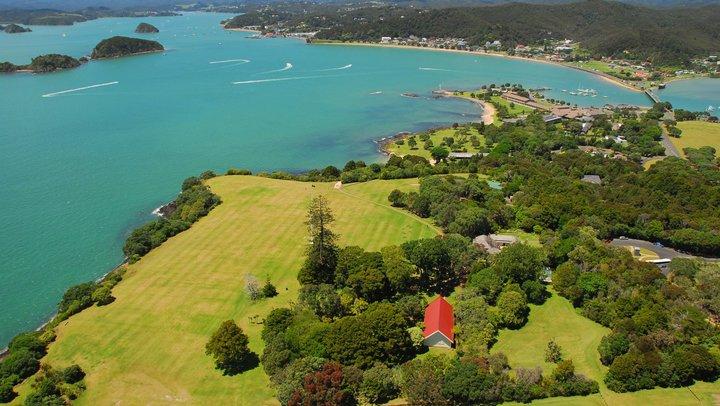
entire world. The Treaty was signed in a place called Waitangi in northern New Zealand.


Follow this Waitangi village link to read about the village of Waitangi.

On your blog, tell us three fun things that you can do as a visitor in Waitangi.
Which one would you like to do the most?

  1. Learn more things about the maori history
  2. Have fun
  3. Experience new stuff